








Home orientation: North or South facing?
There are many things to consider when it’s comes to building a home – location, block size, type of home, layout of the home etc. We could go on and on when it comes to home design, but instead here’s another one for you – Home orientation. Does it matter what direction your new home is facing? Is this a priority for you?
We have put together the following points to give you a better understanding of your home’s optimum orientation. Of course, when you build with WA Country Builders our designers will do all the work for you!
Principles of good orientation
It is important to consider the orientation of the home in relation to seasonal variations in the sun’s path as well as prevailing wind patterns. Good home orientation can reduce or even eliminate the need for supplementary heating and cooling, resulting in lower energy bills, reduced greenhouse gas emissions and improved comfort. If your site is not ideally orientated, there are strategies you can implement to overcome some of the challenges.
North facing home designs are generally desirable here in Perth due to the positioning of the sun. The ideal orientation for living areas is within the range 15°W–20°E of true or ‘solar’ north. This maximises heating and cooling efficiencies. Poor orientation can exclude winter sun and cause overheating in the summer by allowing low angle east or west sun to shine into the home.
It can also vary where you are in Western Australia. For example, someone in Metro Perth will have different needs than someone in the South West. A Busselton home might want to face the ocean to the North West, rather than the West in Perth.
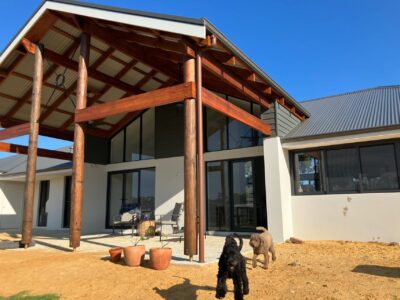
North facing does have a trade-off, so plan your eaves and window sizes early or the same northern sun can bring glare and heat inside in summer.

Check list for designing your new home
The following points provide a brief overview of points you should consider to maximise the thermal comfort that your home design can offer.
- Living areas facing north to catch maximum sun in winter creating warmth and light
- Bedrooms facing south are shielded from the summer sun to provide cooler sleeping conditions
- Locate utility areas (laundries, bathrooms and garages) on the south or west where possible
- Position the majority of windows facing north to allow winter sun to enter while also being protected by summer sun by eaves.
- Keep east facing windows to a minimum as they receive morning sun and can heat the house quickly
- Keep west facing windows to a minimum as they receive afternoon sun and can be difficult to shade
- Ensure south facing windows are modest in size as they do not receive any direct sunlight and can cause heat loss in winter
- Correctly sized, placed and overhanging eaves are essential to provide a balance between winter sun and summer shade
- Planting deciduous trees carefully to provide cooling shade in summer and allow the winter sun to shine into your home
- On an east facing block, put the rooms you use in the morning to the east and keep living areas facing north where you can
- On a west facing block, keep living areas off the western wall and use that side for the garage, laundry or storage
Common questions about home orientation
Is a south facing house good in Australia?
Yes, with the right layout. Here in WA, south facing rooms get no direct sunlight, so they stay cooler and suit bedrooms, laundries and garages. Keep south facing windows modest in size, and face your main living areas north where you can.
Is it better to be north or south facing?
For living areas, north is generally better in WA because it catches the winter sun. South suits bedrooms and utility rooms that you want cooler. Most homes need both, which is why room placement matters as much as the block.